Skip to content

Latest Atricles

Latest posts from our Articles section

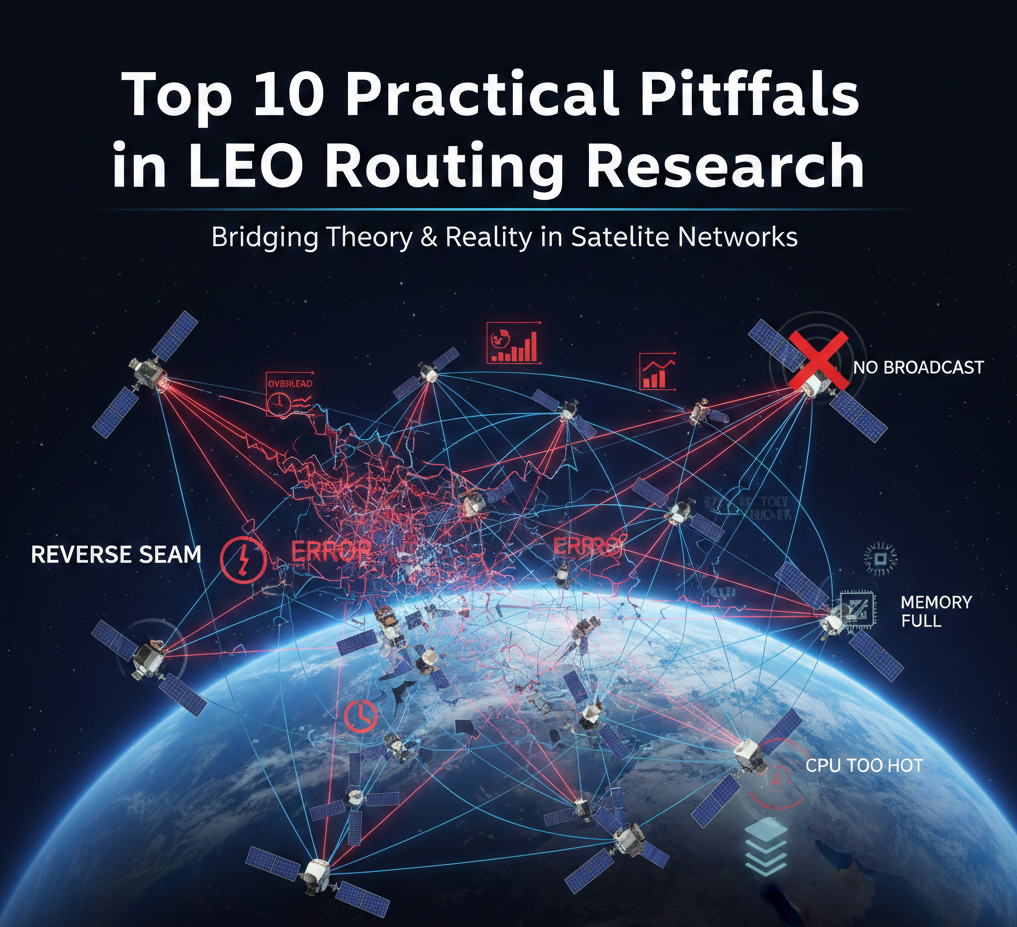
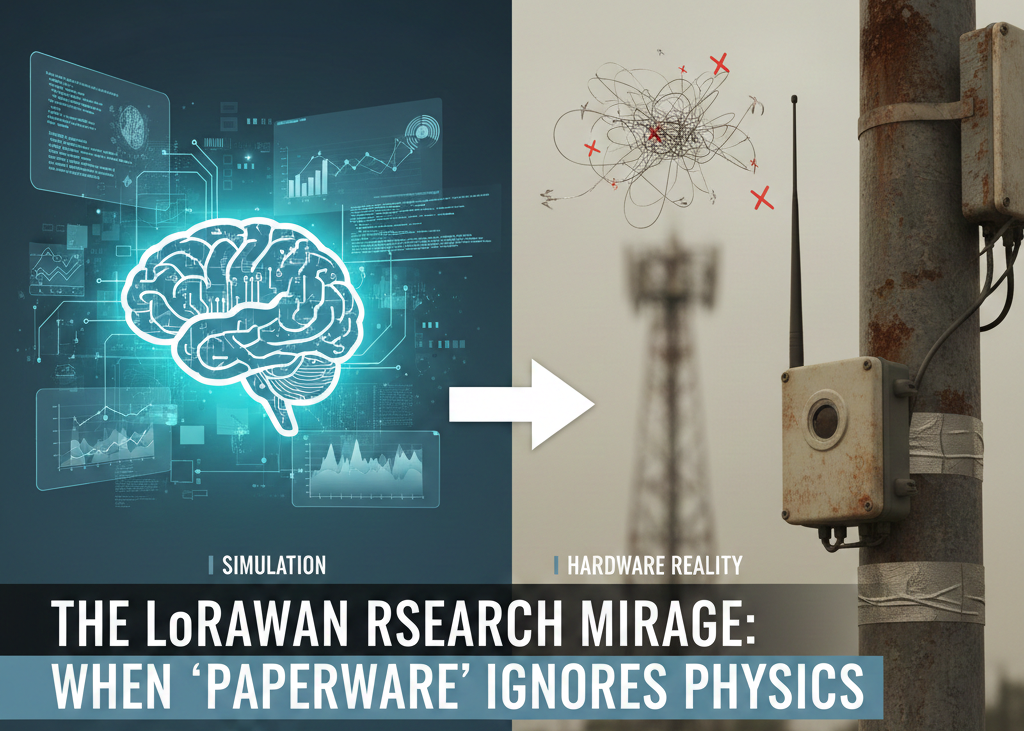
The “Paperware” vs. Reality Guide for implementing Routing in LEO Network

Designing routing protocols for Low Earth Orbit (LEO) satellite networks requires a fundamental shift from terrestrial networking logic. While academic research often treats satellites as highly mobile nodes in a vacuum of infinite resources, the transition to industry practice reveals a landscape defined by deterministic orbital mechanics, extreme hardware limitations, and the physical constraints of laser-based optics. For a scholar, the challenge lies in moving beyond “paperware” and addressing the “physics-first” engineering that governs networks like Starlink or Kuiper. This guide highlights the most common architectural blind spots where theoretical models often fail the test of real-world implementation. The following… Readmore

Beyond the Paper Orbit: Why Most LEO Routing Research Fails the Reality Test

In 2026, the success of a satellite constellation depends on how it manages its “logical brain.” While academia and industry often seem to disagree on clustering, the reality is that the method’s value depends entirely on its architecture. The following guide breaks down the state of LEO routing, distinguishing between the failed theories of the past and the high-speed realities of today. In a network of 10,000+ satellites moving at 7.5 km/s, routing is a battle against computational exhaustion. If every satellite spent its battery power calculating global paths, the constellation would go dark in weeks. 1. The Clustering Paradox:… Readmore

Ph.D. Research Using ns-3 in the Age of AI and Large Language Models

Ph.D. Research Using ns-3 in the Age of AI and Large Language Models Choosing the Right Problems, Conducting Defensible Research, and Surviving Evaluation & Defense The emergence of Artificial Intelligence (AI) and Large Language Models (LLMs) has significantly transformed the way research in Computer Science, Electronics, and Information Technology is conducted and evaluated. Tasks that were once central to doctoral research—such as protocol design, simulation scripting, data analysis, and technical writing—can now be partially automated, raising new concerns about originality, depth, and intellectual ownership. In this evolving academic landscape, simulation-based research using tools such as ns-3 faces increased scrutiny, particularly… Readmore

Why Doing “Unique” Research Has Become Harder in the Age of Intelligent Machines

Why Doing “Unique” Research Has Become Harder in the Age of Intelligent Machines A Critical Analysis of the Changing Nature of Ph.D. Research In previous decades, conducting high-quality research often required only a moderate edge in knowledge or skill over one’s peers. Access to literature was limited, experiments were time-consuming, and generating results demanded significant human effort, which naturally validated the originality and value of a scholar’s work. Today, the landscape of research has changed fundamentally due to the rise of Artificial Intelligence (AI) and Large Language Models (LLMs). Machines can now generate technical content, derive equations, simulate experiments, and… Readmore

The Future of CSE / ECE / IT Ph.D Research in the Age of AI and Large Language Models

The rapid advancement of Artificial Intelligence (AI) and Large Language Models (LLMs) has fundamentally altered the landscape of research in Computer Science, Electronics, and Information Technology. Tasks that once required significant intellectual and manual effort–such as writing technical papers, deriving equations, implementing algorithms, and generating experimental results–can now be partially or fully automated. While this transformation has increased productivity, it has also challenged traditional notions of originality, novelty, and scholarly contribution. As a result, many classical research directions that were once considered suitable for Ph.D.-level investigation are losing relevance, while new expectations are emerging around problem formulation, validation, systems thinking,… Readmore

Afarion iPlayground for ns-3

Afarion iPlayground for ns-3

Afarion iPlayground is a sandboxed, browser-only environment that lets students and researchers write, run, and visualize real simulations without installing anything. It removes the complexity of setup, executes scripts in a secure sandbox, and provides real outputs--logs, traces, animations, and performance metrics. Users Enrolling in to iPlay Courses can run and visualize ns-3 simulations on iPlayground.

Take me to Afarion iPlayground for ns-3

Charles Pandian

Research Consultant
16+ Years of experience with projects and research works.

16+ Years of experience with projects and research works.

Had an opportunity to interact with more than a thousand students/scholars and few hundred teachers and professionals.

More than 13 years of experience in simulation-based studies.

More than 13 years of experience in simulation-based studies.

Experience with ns-2, ns-3, Opnet, Omnet++, Matlab, Simulink, Python and other research oriented programming platforms.

Provided Support for 200+ scholarly research works.

Provided Support for 200+ scholarly research works.

Supported scholars from India, UK, US, Australia, Turkey, Egypt, Oman, Singapore, Malaysia, Thailand, and some other countries.

Mentored 300+ graduate and postgraduate project works for students from different parts of the world.

Mentored 300+ graduate and postgraduate project works for students from different parts of the world.

Supported Electronics, Electronics & Communications, Computer Science and Information Technology ( B.E., B.Tech., M.E., M.Tech., M.S.,) students from India, UK, US, Australia, Turkey, Egypt, Oman, Singapore, Malaysia, Thailand, and some other countries. (Nowadays, not providing support for Undergraduate and Postgraduate Students - but limited support may be available in some cases)

 Just a programmer with a little bit of imagination.

Just a programmer with a little bit of imagination.

Love to do innovations beyond your expectations.

Charles Pandian

Testimonials From Scholars (Anonymized Names)

Our Services

We Provide Exclusive Services for Research Students and Scholars

Articles

Articles

We periodically post articles on ns-2, ns-3, Matlab and other subjects for ECE, CSE and IT students and scholars

Research Assistance

Research Assistance

We provide exclusive research assistance/support for students and scholars from India, UK, US and other countries.

Typesetting

Typesetting

Compose Quality Journal Papers with our typesetting service (Available only for Limited Scholars)

Let's Do Some Real Research Together

To do a genuine research, you will need a good teacher or mentor 

How To Get My Research Support or Assistance?

You can get my support in few easy steps.

Start Communication

Just start your discussion by sending an introductory e-mail or WhatsApp Message, or make a phone call. Introduce yourself and briefly explain your research problem and scope.

Discuss About Your Research

Based on your research requirements, both of us discuss more about the possibility of implementation of your idea.

After few days of Discussion we will find a Solution

After sufficient preliminary study and experiments, both of us together, will find a way to implement your idea.

How To Get My Research Support or Assistance?

Contact Charles

   Contact
WhatsApp chatDiscuss Through WhatsApp

Charles Pandian,
ProjectGuideline.com
(An Online Division of formerly known 'Info Genesis Software, Coimbatore')
Tamilnadu, India